
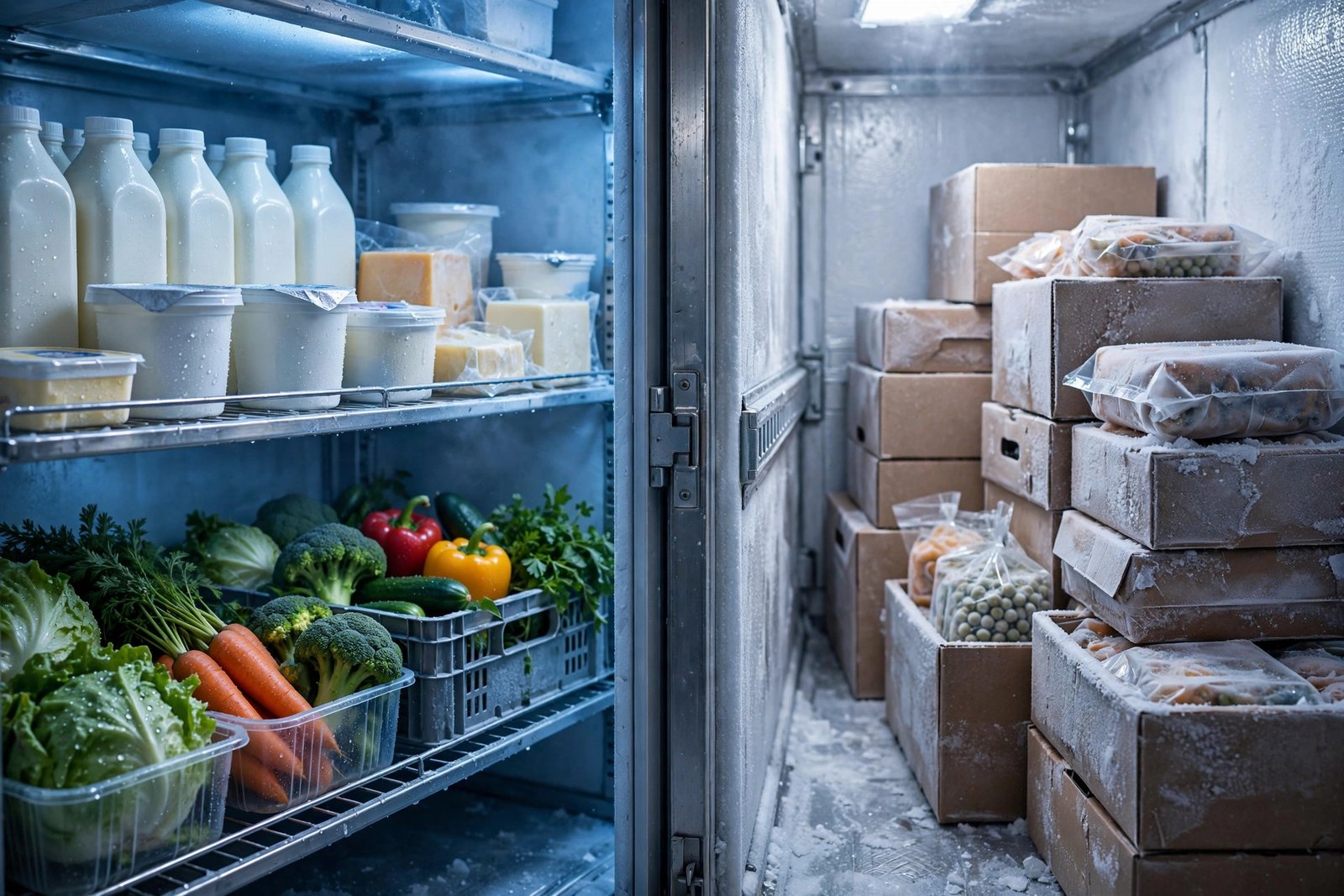
Understanding the chiller van vs freezer van difference is the first step when booking temperature-controlled transport in Dubai. You will quickly meet two options: the chiller van and the freezer van. They look similar from the outside, but they do very different jobs — and choosing the wrong one can ruin a full load of stock before it ever reaches your customer.
The difference comes down to temperature. A chiller van keeps goods cool; a freezer van keeps them frozen. This guide explains the temperature range of each, which goods belong in which, what goes wrong when the choice is reversed, and how to pick the right vehicle for your business.
A chiller van is a refrigerated vehicle designed to hold a steady chilled temperature — typically between +5°C and +10°C. It keeps goods cool and fresh without freezing them, which matters because many fresh products are damaged by freezing. The cooling unit runs continuously during the journey, holding the cargo area in that chilled band even when it is 45°C outside. For official food safety requirements, you can also refer to guidance from Dubai Municipality.
Chiller vans suit fresh produce such as fruit and vegetables, dairy products including milk, cheese and yoghurt, prepared catering food and bakery items, beverages that need chilled storage, and flowers and live plants. Restaurants, cafés, caterers, supermarkets, and florists are the most common users — any business where freshness, texture, and appearance have to survive the journey. Our chiller van rental in Dubai covers 1-ton vans for small drops through to larger chilled trucks.
A freezer van is built for a colder job: holding temperatures below 0°C, all the way down to -18°C. At these temperatures, water inside the product stays frozen solid, which stops bacterial growth and keeps frozen goods safe and stable for the whole journey. Like chiller vans, freezer vans use adjustable temperature control — but their range extends deep into freezing territory that a chiller unit cannot reach.
Freezer vans suit ice cream and frozen desserts, frozen meat, poultry and seafood, and other frozen foods — as well as pharmaceuticals such as medicines and vaccines that must stay within a strict frozen band. Supermarkets, ice cream brands, frozen food distributors, and healthcare companies are typical users. Our freezer van rental in Dubai is available with or without a driver, on daily, weekly, and monthly terms.
| Chiller van | Freezer van | |
|---|---|---|
| Temperature range | +5°C to +10°C | Below 0°C, down to -18°C |
| Keeps goods | Cool and fresh | Frozen solid |
| Typical cargo | Fresh produce, dairy, catering food, bakery, beverages, flowers | Ice cream, frozen meat and seafood, frozen foods, pharmaceuticals |
| Typical users | Restaurants, cafés, caterers, florists | Supermarkets, ice cream brands, frozen food distributors, healthcare |
This chiller van vs freezer van comparison table is a quick reference, but always confirm the exact temperature your goods need before you book — when in doubt, ask the rental company to recommend the right vehicle.
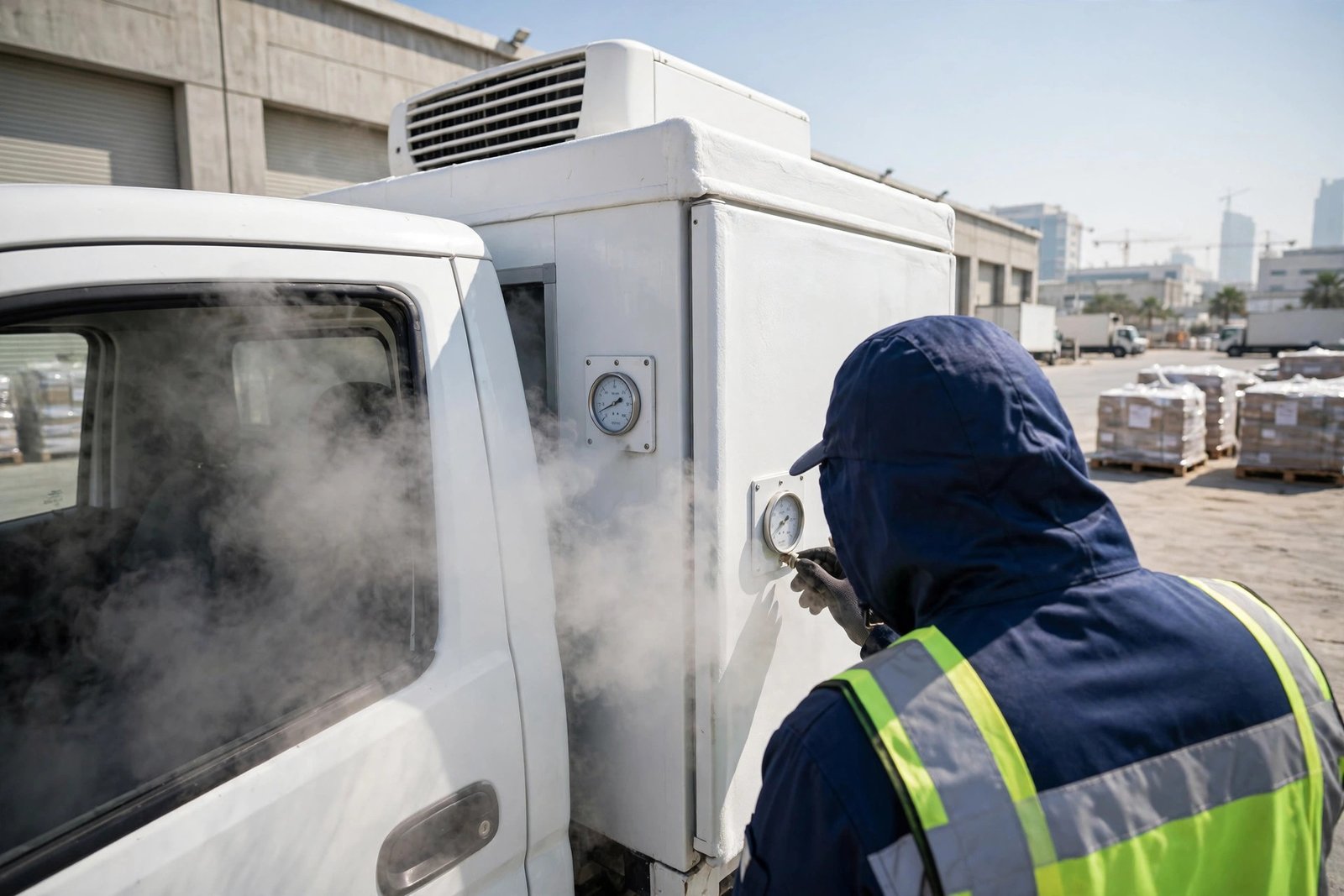
Getting the chiller van vs freezer van choice wrong has real consequences. Put fresh goods in a freezer van and the cold does real damage. Fresh fruit and vegetables turn mushy and discoloured once frozen and thawed; dairy products can split and change texture; flowers are destroyed outright. The goods may look fine at first glance, but their quality, taste, and shelf life are gone — and so is their value to your customer.
Put frozen goods in a chiller van and the danger runs the other way. Ice cream softens and melts; frozen meat and seafood begin to thaw, and any refreezing afterwards is a food safety risk. Even a partial rise above freezing can spoil a load that looked perfectly fine at loading. For a food business, that means wasted stock, failed quality checks, and — in the worst case — a risk to your customers’ health.
The lesson from this chiller van vs freezer van guide is simple: match the vehicle to the goods, not the other way round. If you are unsure which your products need, describe them to the rental company — a good provider will tell you honestly which temperature band fits.
Many businesses carry both chilled and frozen goods — a supermarket restocking run might include fresh dairy alongside frozen meat. For these trips, partitioned refrigerated trucks are the answer: an internal partition divides the cargo area into two temperature zones, so frozen goods can travel at -18°C in one section while chilled goods ride at +5°C to +10°C in the other, all in a single trip. Our refrigerated truck rental in Dubai includes dual-zone options from 3.5 to 10 tons.
Start with your goods. Write down what you transport and the temperature it needs — chilled (+5°C to +10°C) or frozen (down to -18°C). That single answer settles the chiller van vs freezer van question in most cases.
Next, consider volume and route. A 1-ton van suits small restaurant deliveries and single-location drops; a 3.5-ton truck fits mid-size distributors; bulk supermarket distribution may need up to 10 tons. For multi-drop routes, remember that every door opening lets warm air in — so an experienced driver who keeps door-open time to a minimum is worth having.
Then think about how you want to rent: with a driver or self-drive, and on daily, weekly, or monthly terms. Daily rental covers one-off jobs; weekly suits events and seasonal peaks; monthly and long-term contracts fit businesses with regular routes. For self-drive you will need a valid UAE driving licence, and the company should brief your driver on the refrigeration unit before handover.
Once you have settled the chiller van vs freezer van decision and know what you need, booking takes a few steps: contact the company with your pickup and delivery locations, cargo type, and required temperature; get a quote based on vehicle size, rental duration, and driver requirement; confirm the booking; and the vehicle arrives pre-cooled to your temperature, ready to load. Have a copy of your trade licence and your Emirates ID ready — plus a valid UAE driving licence for self-drive — and note that a refundable security deposit may apply.
Alhammad Transport LLC offers chiller van, freezer van, and refrigerated truck rental across Dubai and the UAE — daily, weekly, and monthly, with or without a driver. Tell us what you need to move and the temperature it needs, and we will match you with the right vehicle. Call or WhatsApp us on +971 52 765 9900 or email info@alhammadtransport.com — our team is available 24/7.
The difference is temperature. A chiller van holds goods between +5°C and +10°C — cool but not frozen — while a freezer van holds temperatures below 0°C, down to -18°C, keeping goods frozen solid.
Fresh fruit and vegetables, dairy products such as milk, cheese and yoghurt, prepared catering food, bakery items, beverages, and flowers — anything that must stay cool and fresh without freezing.
Ice cream and frozen desserts, frozen meat, poultry and seafood, and other frozen foods — plus pharmaceuticals such as medicines and vaccines that must stay within a strict frozen temperature band.
Yes. Partitioned refrigerated trucks can hold two temperature zones at once — for example, frozen goods at -18°C in one section and chilled goods at +5°C to +10°C in the other — so mixed loads can travel in a single trip.
Yes. Vans are available on a daily, weekly, and monthly basis, with or without a driver, so you can book for a single delivery or set up a long-term contract.